Once you have decided to invest in solar energy in Antalya, the next question is where the panels should go. For an apartment block in Muratpaşa the answer is obvious, but for a villa with a large garden in Döşemealtı, a farm in Serik or a factory with spare land beside its warehouse, both a rooftop and a ground-mount system may be possible.
Each option has real strengths. This guide compares rooftop and ground-mount solar across the factors that matter most in Antalya, with examples from our own projects, so you can choose the layout that gives you the best mix of cost, yield and long-term value.
The short answer
If you have a structurally sound roof with good orientation and enough area for your needs, rooftop solar is usually the most economical choice, because the structure already exists. If your roof is small, shaded, complex or fragile, or if you need more capacity than it can provide, a ground-mount system on suitable land often delivers more energy per kilowatt-peak and is easier to maintain.
Rooftop solar: using space you already own
- Lower structural cost: no foundations or tall frames, and short cable runs to the main distribution board.
- No land use: the system occupies a surface that is already built, which is a genuine sustainability advantage.
- Shading the building: panels shade the roof itself, which can slightly reduce heat gain on flat concrete roofs.
- Constraints: orientation and tilt are dictated by the roof, chimneys and water heaters take space, and roof condition must be checked first.
- Access: cleaning and inspection require safe roof access, which can be harder on steep tiled roofs.
Ground-mount solar: freedom to optimise
- Ideal orientation: panels can face due south at the optimum tilt, with rows spaced to avoid winter shading.
- Better cooling: air circulates freely behind the modules, which reduces heat losses in Antalya's summer.
- Easy maintenance: cleaning, inspection and repairs happen at ground level.
- Scalability: capacity is limited by land, not roof area, and expansion is simple.
- Constraints: higher structural cost, longer cable runs, land-use and zoning checks, and the land itself is no longer available for other uses.
Side-by-side comparison
| Factor | Rooftop | Ground-mount |
|---|---|---|
| Cost per kWp | Usually lower | Usually higher at small scale, competitive at large scale |
| Yield per kWp | Depends on roof orientation and tilt | Typically higher thanks to optimal tilt and cooling |
| Space required | Existing roof only | Dedicated land plus access paths |
| Permits | Grid application; owners' approval in shared buildings | Grid application plus zoning and land-use checks |
| Maintenance | Requires roof access | Easy, at ground level |
| Visual impact | Follows the building | Visible in the landscape unless screened |
| Expansion | Limited by roof area | Limited by land area |
Antalya solar energy: which layout suits which property
Apartments and city homes
In Konyaaltı, Muratpaşa or Lara, rooftop is almost always the only option. Shared roofs need the approval of the owners' association, and we often design one system for common areas or several smaller systems for individual flats.
Villas with gardens
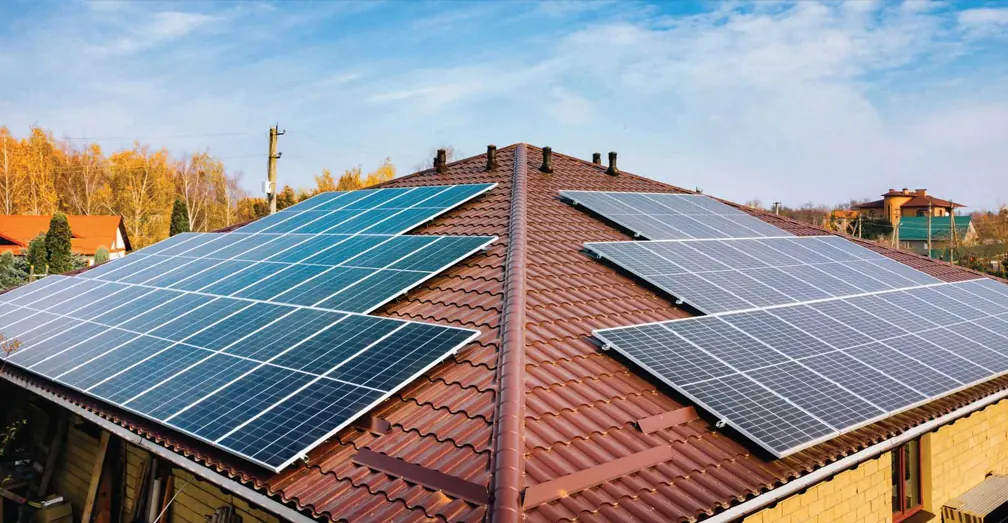
This is where the choice is genuinely open. A villa with a well-oriented roof will normally go rooftop. If the roof is complex or heritage-sensitive, a discreet ground array in the garden, perhaps combined with a pergola or carport, can be the more elegant and productive solution.
Hotels, factories and warehouses
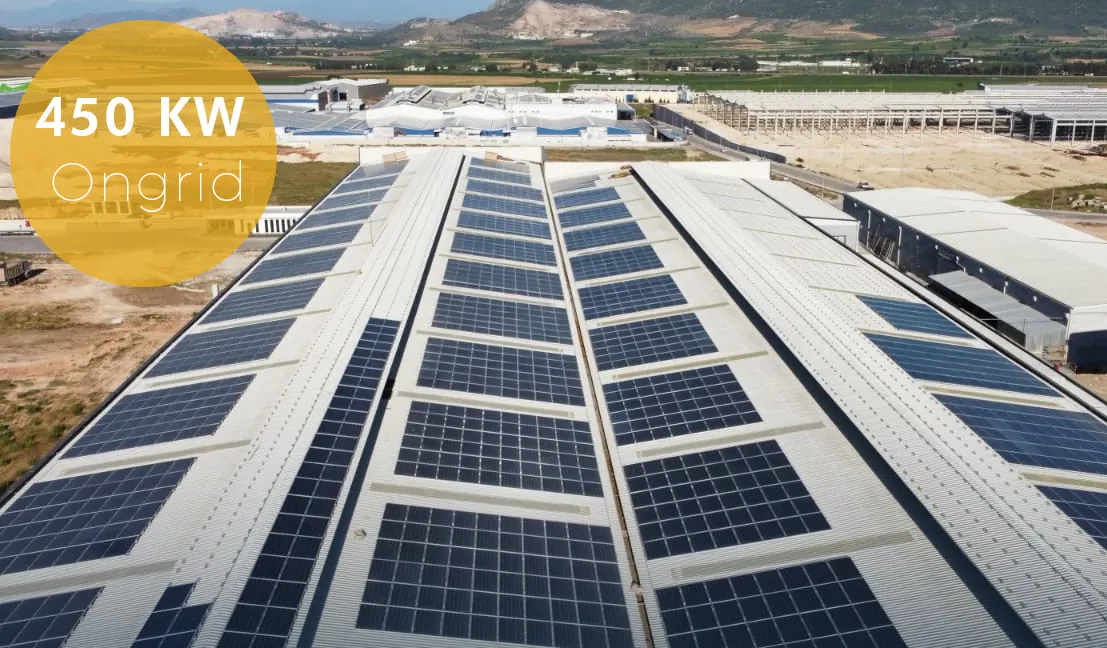
Large flat or metal roofs are ideal for commercial rooftop solar, and car parks can host canopies. Spare land beside a site can add capacity once the roof is full.
Farms and land investors
For irrigation pumps and plants on open land, ground-mount is the natural choice. Land-use classification matters here, as productive agricultural land is protected; we review zoning before any design work.
What our projects tell us
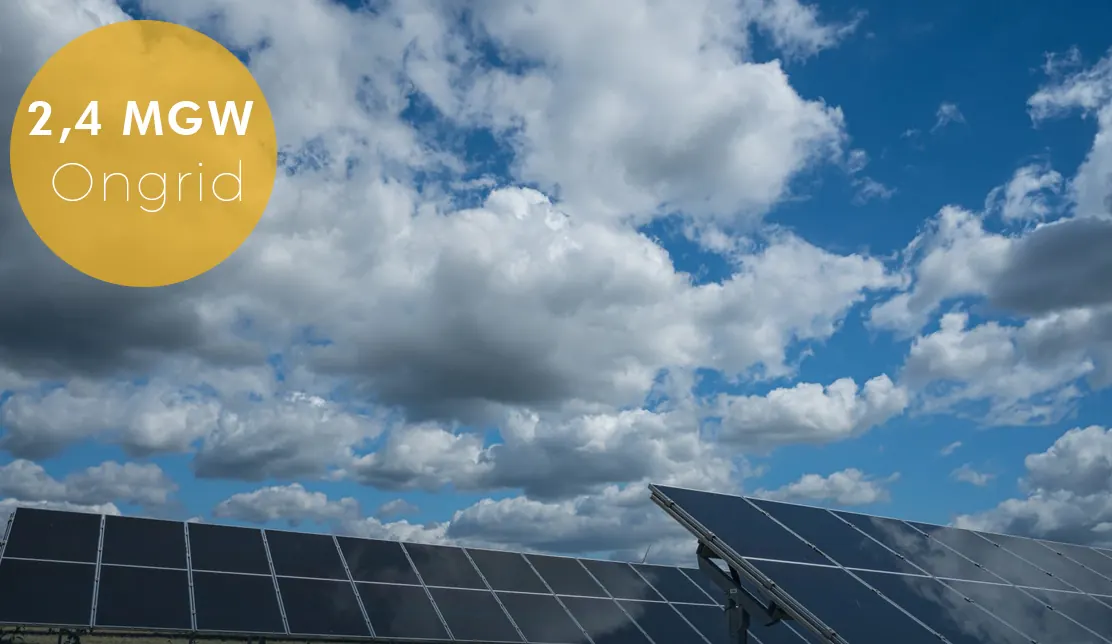
Our rooftop references span a 3.3 kW tiled-roof home to industrial roofs of 450 kW, 860 kW, 970 kW, 1.3 MW and 4.5 MW. On land we have built 680 kW and 2.4 MW ground-mount plants, as well as a 5.5 kW ground-mounted solar irrigation system in an open field. The lesson is consistent: a well-engineered rooftop wins on cost where the roof is good, while ground-mount wins on yield and flexibility where land is available and suitable. See details on our rooftop solar and ground-mount solar pages.
Wind, heat and salt: engineering for the Antalya coast
Whichever layout you choose, the Mediterranean climate sets specific engineering demands on solar energy in Antalya. Winter storms and occasional strong gusts along the coast mean that roof fixings and ground frames must be calculated for local wind loads, not taken from a generic catalogue. Salt air within a few hundred metres of the sea calls for corrosion-resistant aluminium or hot-dip galvanised steel and stainless fasteners. And summer heat makes ventilation important: rooftop arrays need an air gap beneath the modules, while ground-mount frames naturally benefit from free airflow.
On rooftops we also check the age and condition of the waterproofing or tiles before installation, because a roof that will need renovation in five years is better repaired first. On land, we assess soil conditions to choose between driven piles, screw foundations or small concrete footings.
Which option is greener?
From a sustainability perspective, rooftop solar has the edge because it turns already-built surfaces into clean power stations without touching undeveloped land. Ground-mount plants can still be very environmentally responsible: removable pile foundations, native ground cover between rows, pollinator strips and grazing all help a plant support biodiversity. Either way, the carbon saved over 25 years of Antalya solar energy far outweighs the footprint of the installation.
Making the decision
During our free survey we assess your roof structure, shading and available land, then present the options with their yield, cost and permitting implications. Request your survey and we will help you choose the layout that gives the best return for you and for the environment.